Small stones, big task: rubies in mechanical watches
‘What are these precious stones doing here?’ asks Thomas Gronenthal of DuBois et fils, echoing a question he is asked time and again. Rubies are usually associated with jewellery and crowns. At first glance, they seem out of place in mechanical watches.
However, the watchmaker's answer is less about luxury and more about functionality: these stones are not for decoration, but to reduce friction.
Why are rubies indispensable?
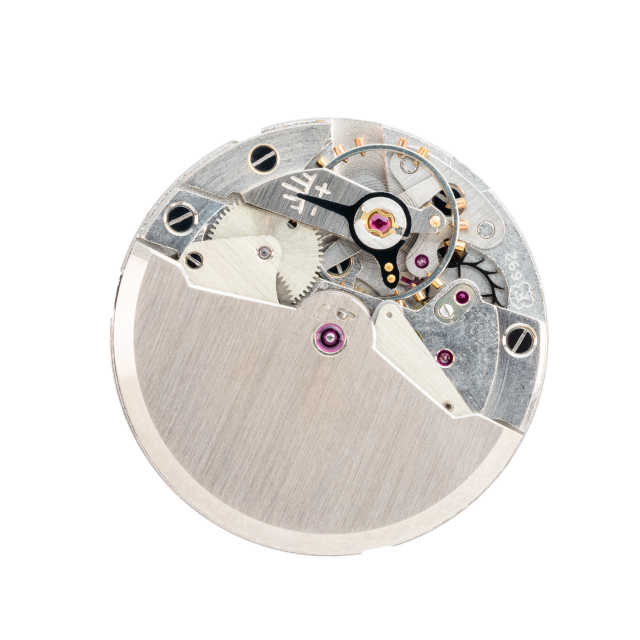
In mechanical watch movements, constant motion and mechanical contact go hand in hand. Ruby bearings ensure that the gears, pinions and balance wheel run with minimal friction. In such a finely interlocking system, this is of crucial importance.
The smoother the operation, the less energy is lost, the less wear and tear occurs, and the more stable the timekeeping becomes. This increases accuracy and longevity. It also extends the intervals between servicing.
What the jewels do
Today, synthetic rubies have replaced the natural gemstones of the past. However, their function remains unchanged: the material is extremely hard, almost like a diamond.
Precise cutting creates a smooth, polished surface. This ensures that tiny droplets of oil adhere exactly where they are needed. As a result, a mechanical movement runs with minimal friction.
More is not necessarily better
Most high-quality movements have between 17 and 25 jewels. More complex complications – such as a perpetual calendar, chronograph or tourbillon – require more. “But,” says the watch expert, “the number alone is not decisive. The quality and placement of the jewels are what matter.” Thomas Gronenthal sums up.
Visibility
Visible rubies have their own charm. Despite their diameter of just one to two millimetres, they can be clearly seen within the movement and are a delight to behold — provided there is an unobstructed view, such as through a sapphire crystal case back, as found in the DBF009.
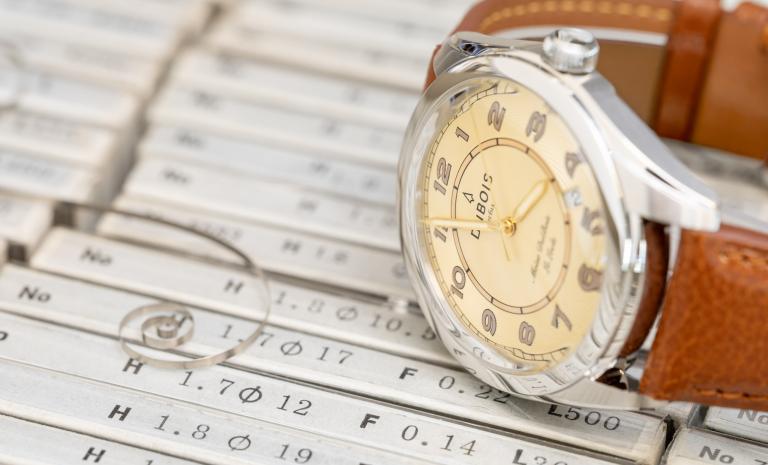
At 'Maison DuBois et fils', thousands of original jewels from various Swiss manufacturers are stored in historic boxes. A glimpse behind the scenes in the workshop reveals how their history lives on and how they are used today.